
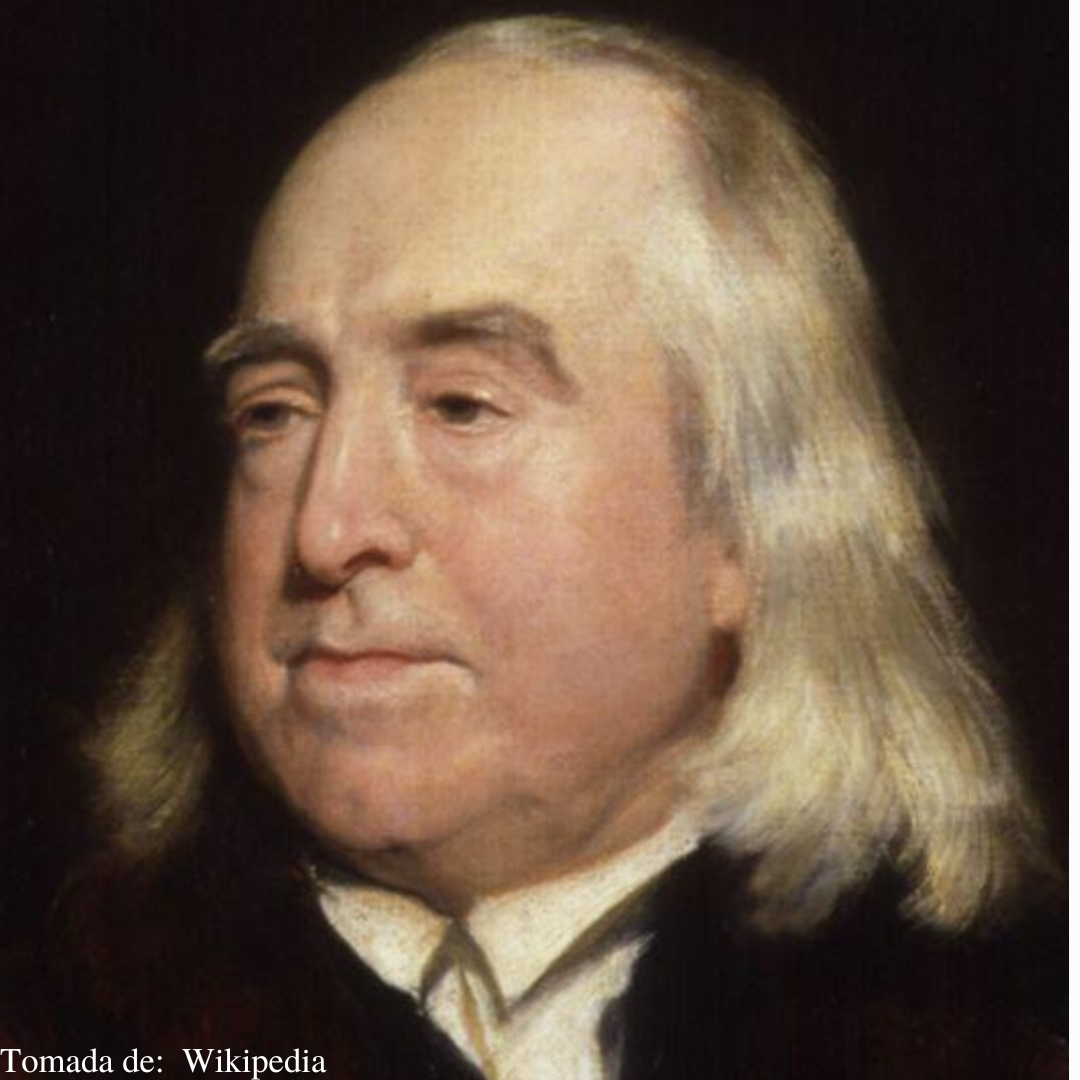
The Classic Utilitarianism of Jeremy Bentham: A Discussion and Historiographical Review About Utilitarianism, His Opposition to the Natural Rights Philosophy and Its Position on the Redistribution of Wealth

Article Sidebar
Main Article Content
Once the above is addressed, this essay shows that the main axiom of utilitarianism - the greatest happiness for the greatest possible number as a measure of right and wrong - requires, based on a method of quantification of pleasure and pain, the intervention of the legislator in the face of externalities and the implementation of certain wealth redistribution measures that lead to the accomplishment of the main principle: to generate the greatest possible equality and happiness.
- Wellness
- Equiality
- Redistribution
- Pleasure
- Pain
Audi, R. (2007). Can utilitarianism be distributive? Maximization and distribution as criteria in managerial decisions. Business Ethics Quarterly, 17(4), 593-611.
Baujard, A. (2010). Collective interest versus individual interest in Bentham´s felicific calculus. Questioning welfarism and fairness. The european journal of the history of economic thought, 17(4), 607-634. https://doi.org/10.1080/09672567.2010.483067
Bedau, H. A. (2000). "Anarchical Fallacies": Bentham's Attack on Human Rights. The Johns Hopkins University Press, 22(1), 261-279.
Bentham, J. (1973). Fragmento sobre el gobierno. Aguilar.
Bentham, J. (1990). Falacias Políticas. Centro de Estudios Constitucionales.
Bentham, J. (1998). The principles of morals and legislation. Prometheus Books.
Colomer, J. (1987). Teoría de la democracia en el utilitarismo. Revista de Estudios Políticos, (57), 7-30.
Fuller, T. (1993). Jeremy Bentham [1748-1832] & James Mill [1773-1836]. En L. Strauss, & J. Cropsey (Comp.), Historia de la filosofía política, (pp. 668-688). Fondo de Cultura Económica.
García-Gibson, F. (2017). Against moral purism. Praxis Filosófica, (46), 189-198. https://doi.org/10.25100/pfilosofica.v0i46.6168
González, J. I. (2006). Ética, Economía y Políticas Sociales. Corporación Región.
Halévy, E. (1901). La formation du radicalisme philosophique, vol 1: la jeunesse de Bentham 1776-1789. Presses Universitaires de France.
Hampsher-Monk, I. (1996). Historia del pensamiento político moderno: los principales pensadores políticos de Hobbes a Marx. Ariel.
Kuhn, T. (2004). La estructura de las revoluciones científicas. Fondo de Cultura Económica.
Sabine, G. H. (1994). Historia de la teoría política. Fondo de Cultura Económica.
Sartori, G. (2002). La Política: lógica y método en las ciencias sociales. Fondo de Cultura Económica.
Schofield, P. (2006). Utility and democracy: the political thought of Jeremy Bentham. Oxford University Press.
Schofield, P. (2009). Jeremy Bentham's ‘Nonsense upon Stilts’. Utilitas, 15(1), 1-26 https://doi.org/10.1017/S0953820800003745
Downloads




Accepted 2022-07-29
Published 2022-09-15

This work is licensed under a Creative Commons Attribution-NonCommercial-NoDerivatives 4.0 International License.
De acuerdo con nuestra política (Licencia Creative Commons CC BY-NC-SA 4.0) los artículos presentados y sometidos al proceso editorial en la revista Praxis Filosófica no tienen costo alguno para sus autores ni retribuciones económicas para la revista. El artículo de carácter inédito, producto de investigación o de algún proyecto que se presente a Praxis Filosófica, no podrá estar sometido a otro proceso de publicación durante el proceso que se lleve en nuestra revista.