
Grammar of Hate in Contemporary Capitalism. A Reading from Spinoza

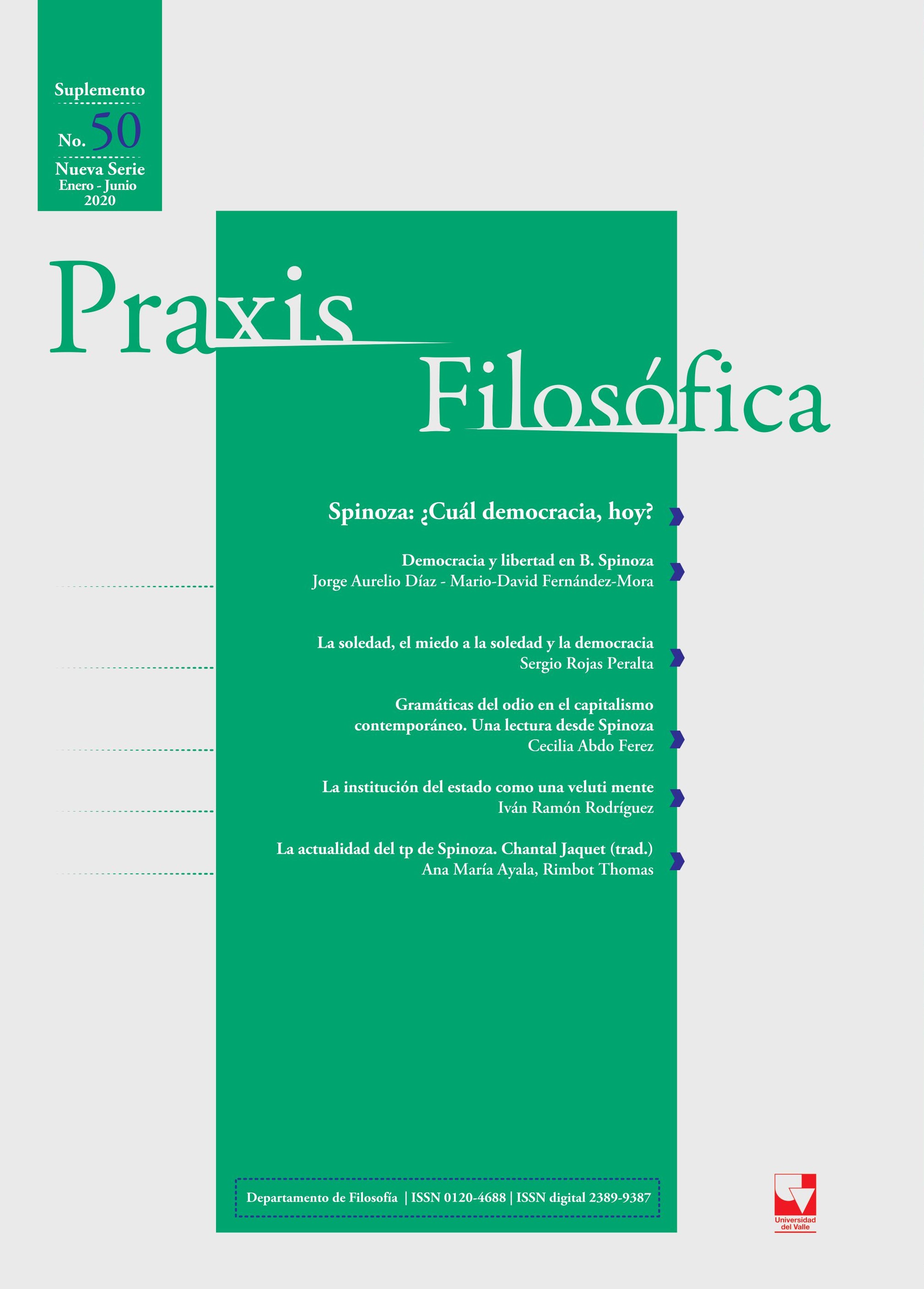
Article Sidebar
Main Article Content
The article goes back to F. Lordon, in his reading of B. de Spinoza, to understand contemporary political phenomena: how is desire configured, in neoliberalism? It is hypothesized that neoliberalism combines two types of movements of what, in spinocist terms, would be called hate. On the one hand, it produces an affect of abjection, an adaptation of desires to the belittled image of itself. On the other, added to the last, by diversifying and fragmenting work experiences in the extreme, neoliberalism intervenes on common experiences, that is, on common affections, invalidating the production of a chain of indignation intense and lasting enough to generate an institutional uproar in a progressive sense (that means: an institutional uproar contrary to neoliberalism, which guarantees social rights). That is, even if there is a lot of vulnerability, precariousness, etc., it is difficult for those many to project themselves and act as alike, for an enduring time, because the production of a common identity is blocked.
- Indignation
- Social Hate
- Neoliberalism
- Theory of Regulation
- Crisis
Downloads




Accepted 2020-01-17
Published 2020-04-15
De acuerdo con nuestra política (Licencia Creative Commons CC BY-NC-SA 4.0) los artículos presentados y sometidos al proceso editorial en la revista Praxis Filosófica no tienen costo alguno para sus autores ni retribuciones económicas para la revista. El artículo de carácter inédito, producto de investigación o de algún proyecto que se presente a Praxis Filosófica, no podrá estar sometido a otro proceso de publicación durante el proceso que se lleve en nuestra revista.